The chapter board See the routebefore you begin. Put learning into practice with step-by-step guides, checklists and member workbooks.
01 Every guide unfolds in ordered sections.
01
8 sections Included with membership
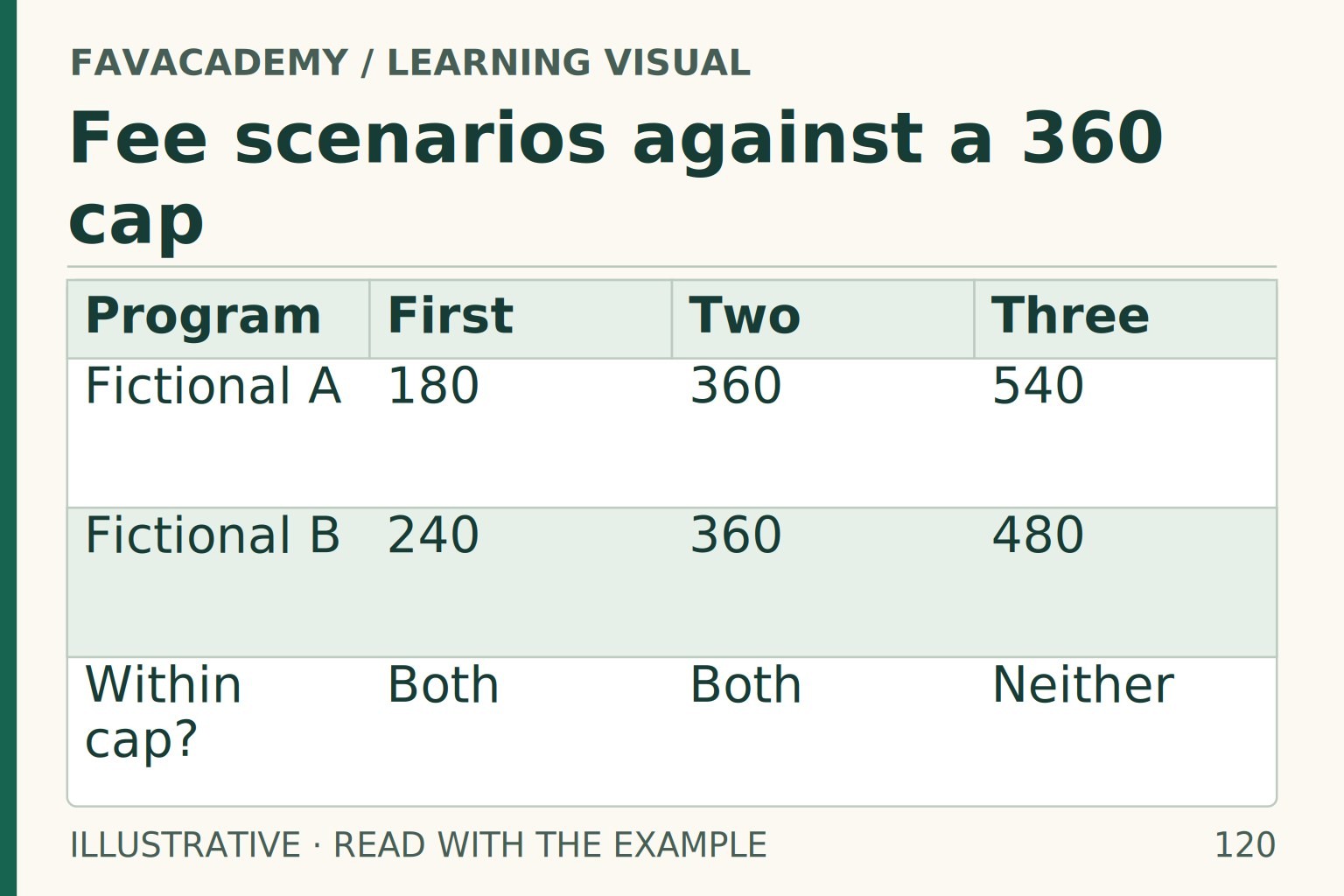
Build a neutral comparison of fictional evaluation programs using eligibility gates, total attempt costs, measurement rules and unresolved terms.
Preview member resource ↗
Member resource The complete guide and available downloads are included with membership.
02
8 sections Public
Trace a fictional reward from eligible simulated results to possible cash payment, separating review, deductions, refunds and provider dependence.
Open guide ↗
SECTION 01 A simulated result is not cash in your bank SECTION 02 Define the eligible result before applying a split SECTION 03 Apply the fictional percentage and charges +5 more sections
03
8 sections Included with membership
Compare explicitly fictional static, closing-balance trailing and intraday-equity trailing limits before reading a program’s actual contract.
Preview member resource ↗
Member resource The complete guide and available downloads are included with membership.
04
8 sections Public
Build a practical pre-activity record for asset identity, contract, venue, custody, costs and continuous-market exposure using fictional examples.
Open guide ↗
SECTION 01 Identify the proposed activity precisely SECTION 02 Confirm identity at each layer SECTION 03 Establish whether the product uses leverage +5 more sections
05
8 sections Public
Separate the ETH transferred from the fee paid for computation, then check fictional gas examples and the meaning of a contract interaction.
Open guide ↗
SECTION 01 Separate the asset from the operation SECTION 02 Distinguish accounts, addresses and interfaces SECTION 03 Read gas units and price per unit separately +5 more sections
06
8 sections Public
Recognize impersonation, excessive token permissions and recovery-fee stories through original scenarios, using no real wallet connections.
Open guide ↗
SECTION 01 Focus on the action being requested SECTION 02 Separate a familiar name from a verified channel SECTION 03 Treat recovery material as authority +5 more sections
07
8 sections Public
Compare fictional venue costs on one consistent route, then inspect custody, withdrawals, liquidity and identity rather than ranking trading fees alone.
Open guide ↗
SECTION 01 Compare the same activity on both services SECTION 02 Establish a common price and budget SECTION 03 Calculate the first fictional route +5 more sections
08
8 sections Public
Compare custody and key-storage choices, then rehearse a recovery checklist using fictional records without entering a real seed phrase.
Open guide ↗
SECTION 01 Identify who controls the signing authority SECTION 02 Separate custody from connectivity SECTION 03 Understand what a backup restores +5 more sections
09
8 sections Public
Use an original shared-record exercise to distinguish validation, ordering and finality, while recognizing that blockchain designs differ.
Open guide ↗
SECTION 01 A shared record has several separate problems SECTION 02 Test validity before agreeing about order SECTION 03 Understand what linking blocks contributes +5 more sections
10
8 sections Public
Trace an original Bitcoin transaction in satoshis, distinguishing spendable outputs, change, fees and confirmation from a wallet balance.
Open guide ↗
SECTION 01 Control starts with spending conditions SECTION 02 Work in the smallest units for the example SECTION 03 Allocate payment, change and fee +5 more sections
11
8 sections Public
Compare forex and crypto through the exact asset, custody arrangement, venue and settlement process, using an original fictional decision map.
Open guide ↗
SECTION 01 Begin with what the transaction creates SECTION 02 Distinguish a coin from a price contract SECTION 03 Separate venue records from network transfers +5 more sections
12
8 sections Public
Test your understanding with original quote, pip, cost, margin, order and identity questions, then use the explanations to plan further study.
Open guide ↗
SECTION 01 Use this as a learning check, not a licence SECTION 02 Question one: what does the quote mean? SECTION 03 Question two: convert a pip move to cash +5 more sections
13
8 sections Public
Read commonly confused forex terms through one fictional position, separating quotes, exposure, margin, equity, costs and execution.
Open guide ↗
SECTION 01 Use one position to connect the terms SECTION 02 Base, quote, bid and ask SECTION 03 Pip, pipette and price change +5 more sections
14
8 sections Public
Build a reusable evidence log for legal identity, permissions, contact details and unresolved discrepancies, with explicit jurisdiction and review dates.
Open guide ↗
SECTION 01 Make the record answer a narrow question SECTION 02 Start with the contracting entity SECTION 03 Reach the official source independently +5 more sections
15
8 sections Public
Validate a sizing result with explicit units, costs, rounding and a fresh cash-loss check, using a fictional account-currency example.
Open guide ↗
SECTION 01 Treat the output as a proposal to verify SECTION 02 Freeze the budget and price assumptions SECTION 03 Convert the budget into a raw quantity +5 more sections
16
8 sections Public
Validate pip values in quote, base and third currencies using explicit hypothetical conversion rates and reproducible unit checks.
Open guide ↗
SECTION 01 Write the units before opening the calculator SECTION 02 Check the quote-currency case first SECTION 03 Convert into a base-currency account +5 more sections
17
8 sections Public
Check percentage conventions, changing capital bases and invalid inputs in a loss-recovery calculator, without turning arithmetic into a recovery plan.
Open guide ↗
SECTION 01 Define the question the calculator answers SECTION 02 Create a clean fictional test case SECTION 03 Verify percentage and decimal conventions +5 more sections
18
8 sections Public
Reproduce one standard pivot calculation from fictional inputs, then investigate formula, session and rounding mismatches before trusting an output.
Open guide ↗
SECTION 01 Test the calculation before interpreting the level SECTION 02 Freeze a small input record SECTION 03 Reproduce the central pivot +5 more sections
19
8 sections Included with membership
Build a timestamped observation sheet for market stress, distinguishing measures, missing data and conflicting evidence without creating a trading signal.
Preview member resource ↗
Member resource The complete guide and available downloads are included with membership.
20
8 sections Public
Create a local-time planner that preserves UTC, named time zones and the actual date, then check clock changes and personal availability.
Open guide ↗
SECTION 01 Plan availability rather than a market opportunity SECTION 02 Preserve the source time and its location SECTION 03 Use date-aware conversion rather than a fixed habit +5 more sections
More resources Resources help you apply what you learn through structured guides, checklists and practical workbooks. Public resources are open to everyone; member resources include the full guide and its available downloads. For explanations and perspectives, read Insights . Subscribe to the article feed .
 Preview member resource